The $350,000 Question
When leadership wanted to buy iPads for the sales team, I asked: "But will that actually work?"
Timeline: 5 weeks
My Role: UX Researcher (solo)
The Stakes: A costly hardware investment that might solve nothing
The Setup
Leadership called a meeting. They had a problem: sales reps weren't taking notes in the CRM. And they had a solution: buy everyone iPads. Done.
I asked one question: "Why aren't they taking notes in the first place?"
Nobody had actually asked the reps.
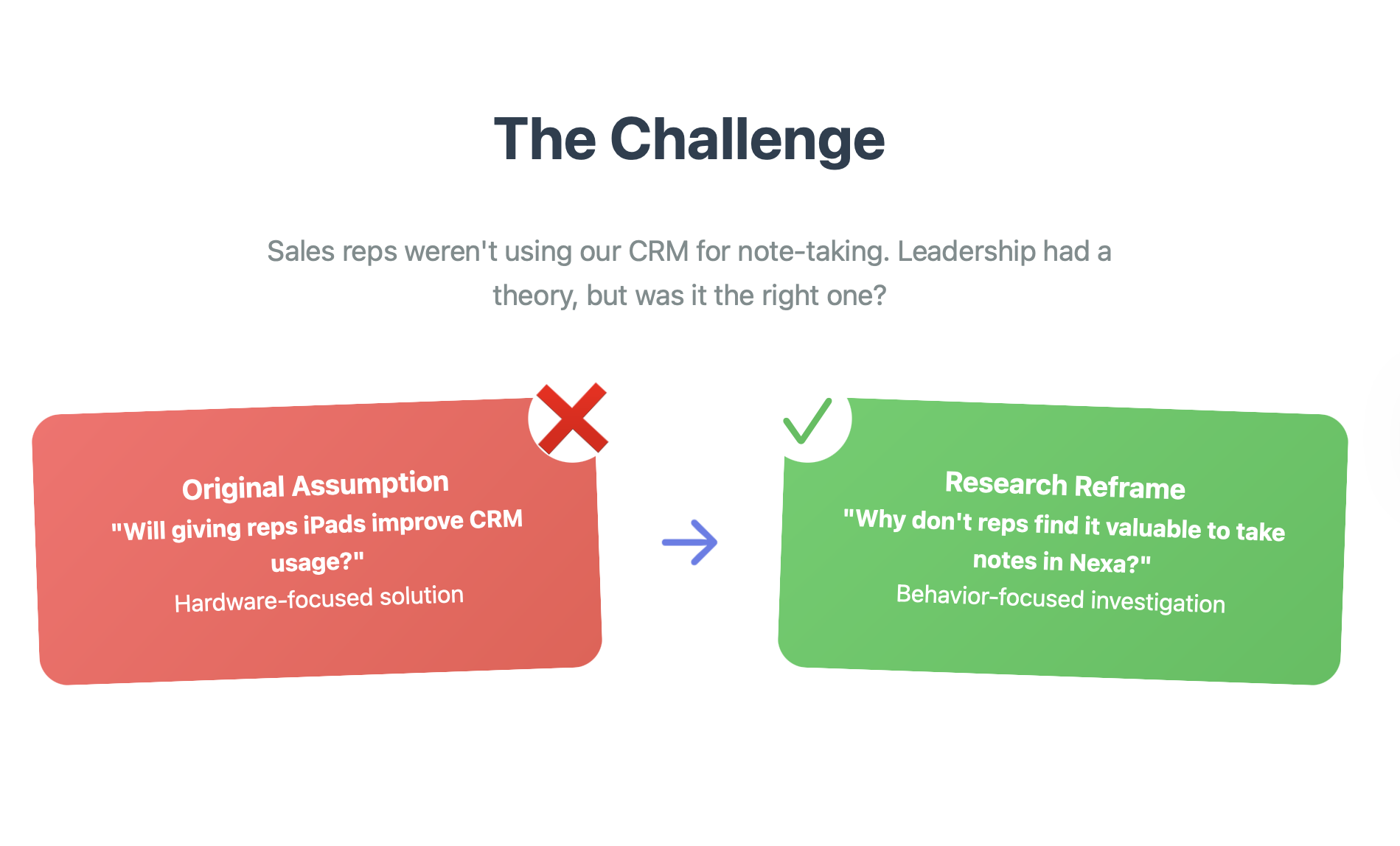
Leadership's theory: "If we give reps iPads, they'll use the CRM more."
It was a hardware solution to what they assumed was a hardware problem. But something felt off. We were about to spend $50K+ without understanding what we were solving.
So I reframed the question.
Instead of: "Will iPads improve CRM usage?"
I asked: "Why don't reps find it valuable to take notes in the first place?"
That shift, from validating a solution to understanding the problem, changed everything.
What I Did
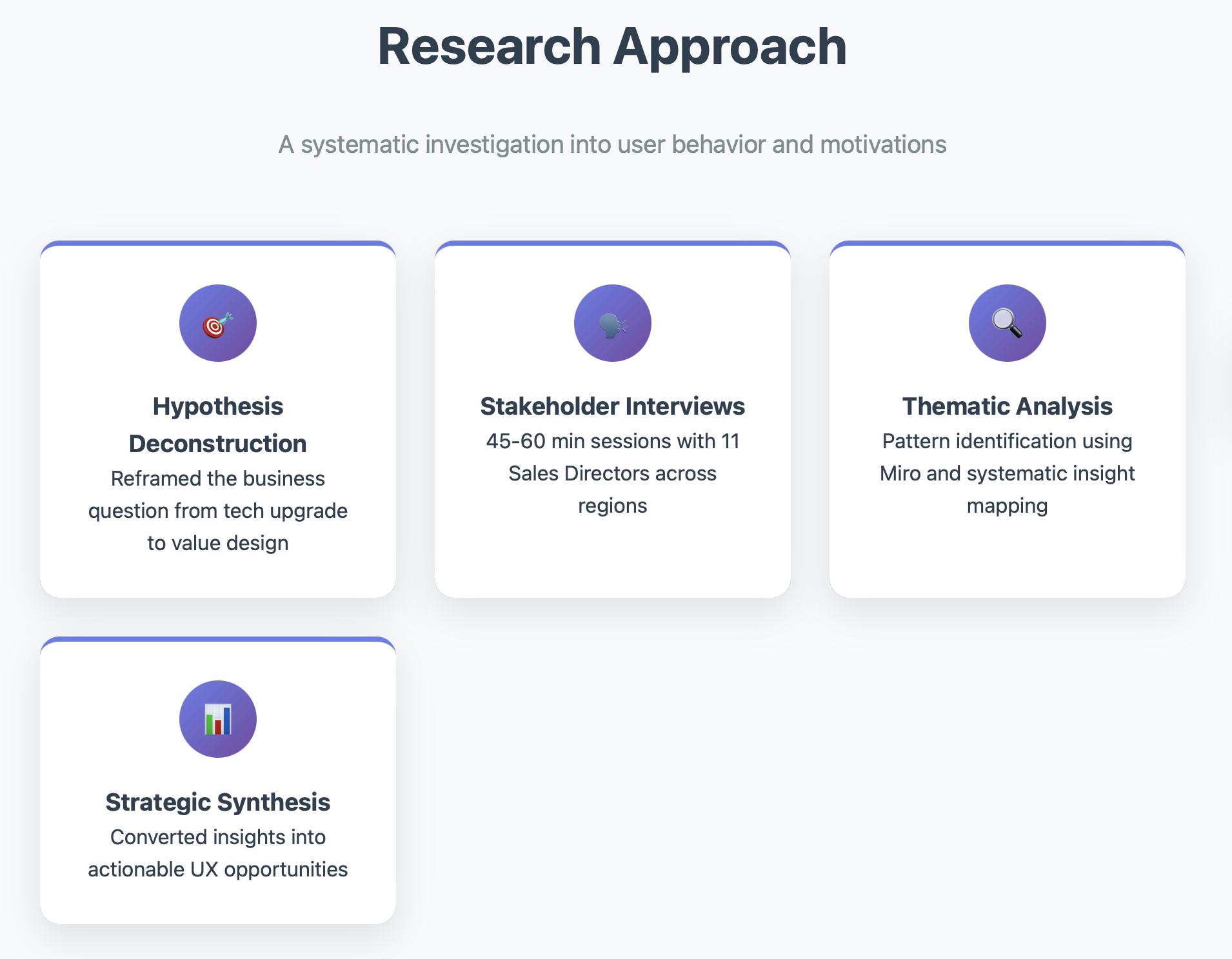
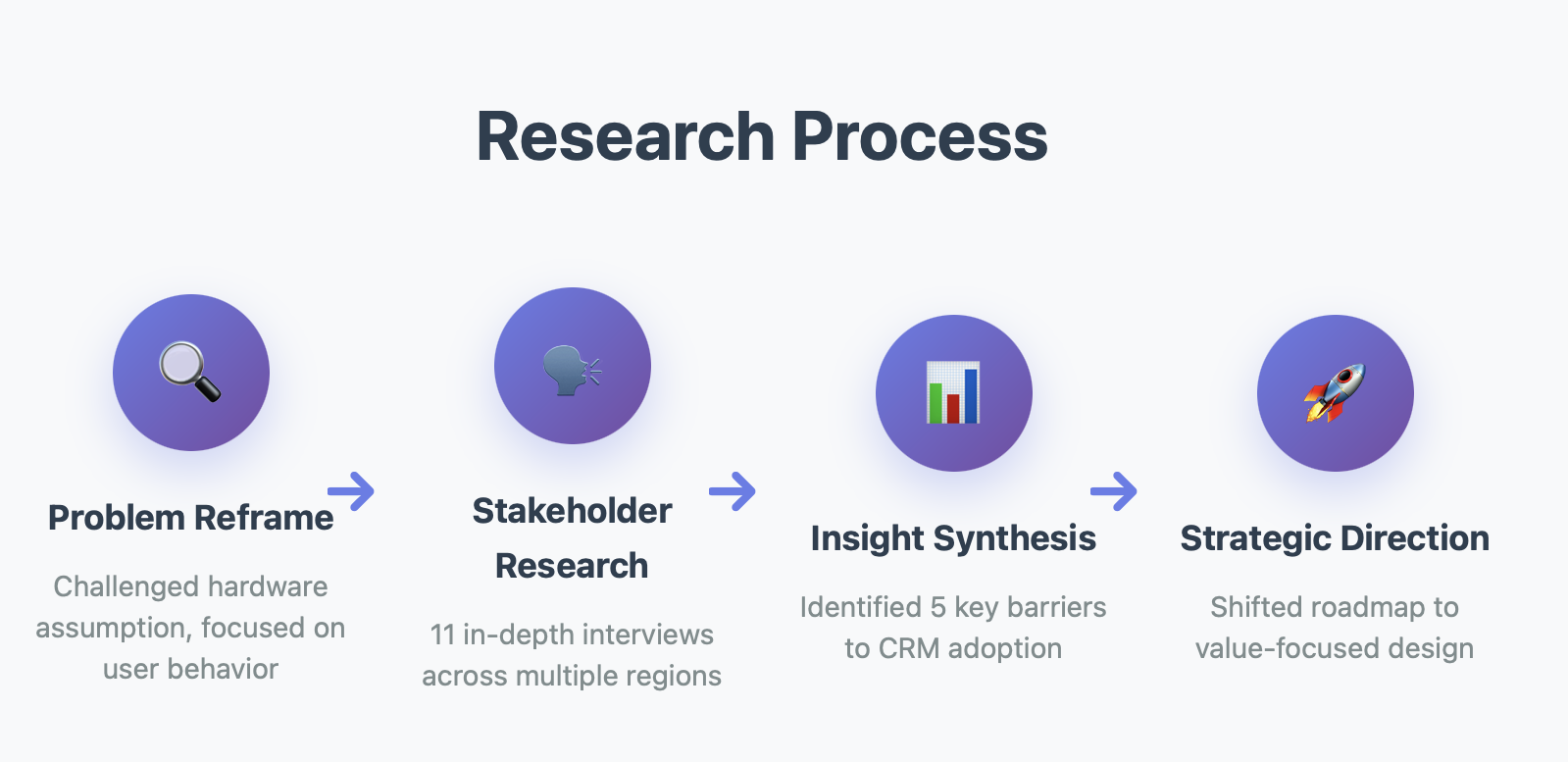
I spent 5 weeks talking to people. Not surveys. Not dashboards. Actual conversations.
11 Sales Directors across multiple regions
45-60 minutes each
One goal: Understand why note-taking in Nexa felt like pulling teeth
I wasn't trying to prove leadership wrong. I wanted to understand what was actually happening in the field.
What I found surprised everyone.
What I Found Out
1. It wasn't about the device. It was about the work.
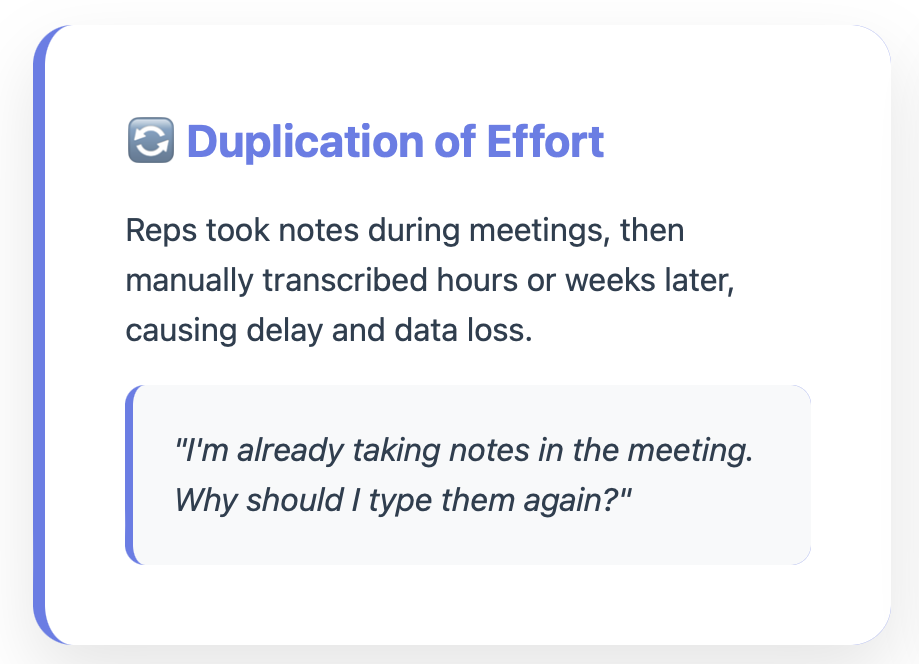
Reps were already taking notes, on paper, on phones, on reMarkable tablets. The issue wasn't how they captured information. It was that they had to enter it twice.
One Sales Director told me:
"I'm already taking notes in the meeting. Why should I type them again?"
Every note took 15-30 minutes to transcribe. That's 7-10 hours per month of pure admin work. Per rep. More than a full workday spent retyping information they'd already captured.
The problem wasn't the input. It was a duplication.
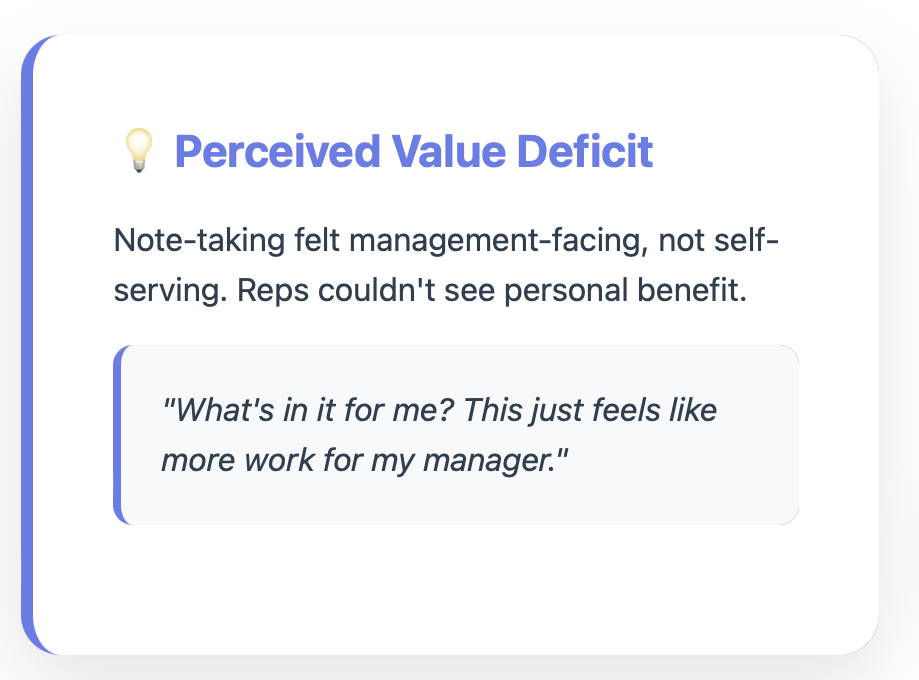
2. Nexa felt like work for management, not for them.
Reps didn't see personal value in entering notes. They saw it as something leadership wanted.
"What's in it for me? This just feels like more work."
No insights. No shortcuts. No reminders. Just data entry that disappeared into a black hole. When a tool only takes and never gives back, people won't use it. Doesn't matter how easy you make it.
The problem wasn't the interface. It was the value exchange.
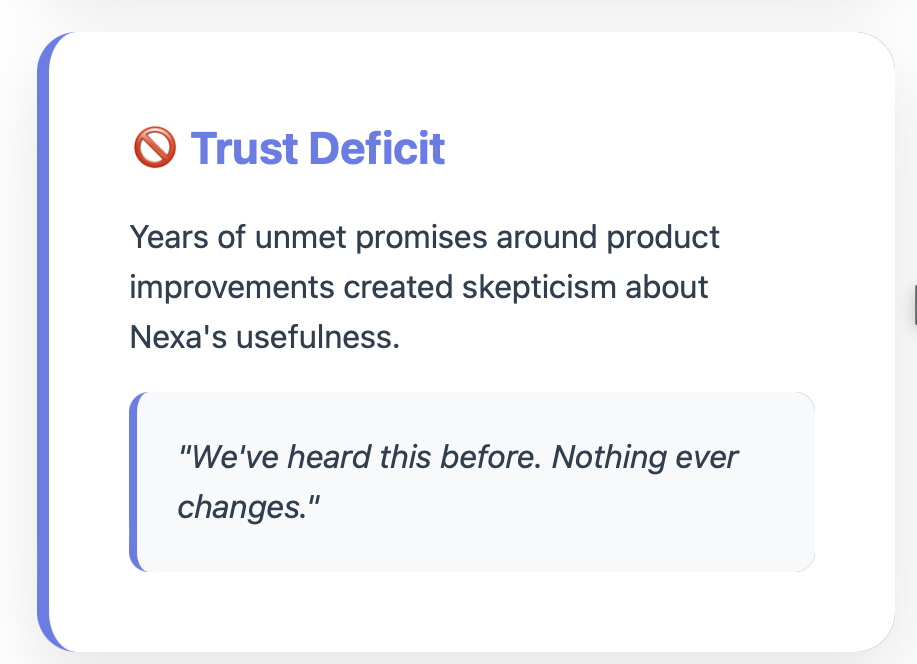
3. Nobody believed Nexa would get better.
Years of broken promises created a trust deficit no hardware could fix.
One Director told me a story I couldn't forget:
"Back in 2016, we were told: 'Input your data, and marketing will give you insights.' It's 2022. That tool just launched. Six years later."
When you lose trust, you lose engagement. Nexa had lost trust a long time ago.
"We've heard this before. Nothing ever changes."
The problem wasn't adoption. It was credibility.
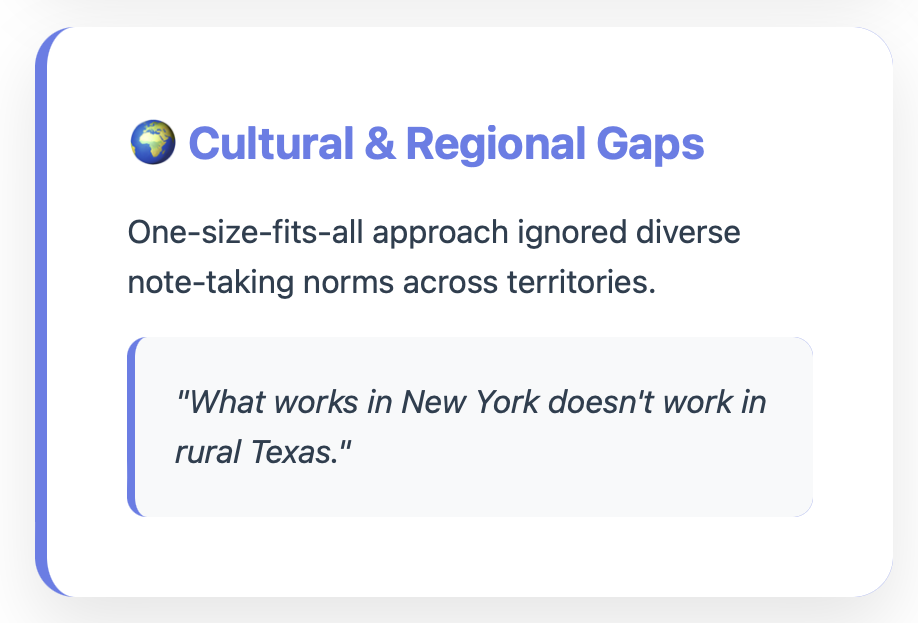
4. One-size-fits-all doesn't work globally.
What works in New York doesn't work in rural Texas. What works in an office doesn't work on a farm.
"What works in New York doesn't work in rural Texas."
In some regions, pulling out an iPad during a meeting felt cold or disrespectful. In agricultural settings, it was impractical or unsafe. The system assumed everyone worked the same way.
The problem wasn't standardization. It was rigidity.
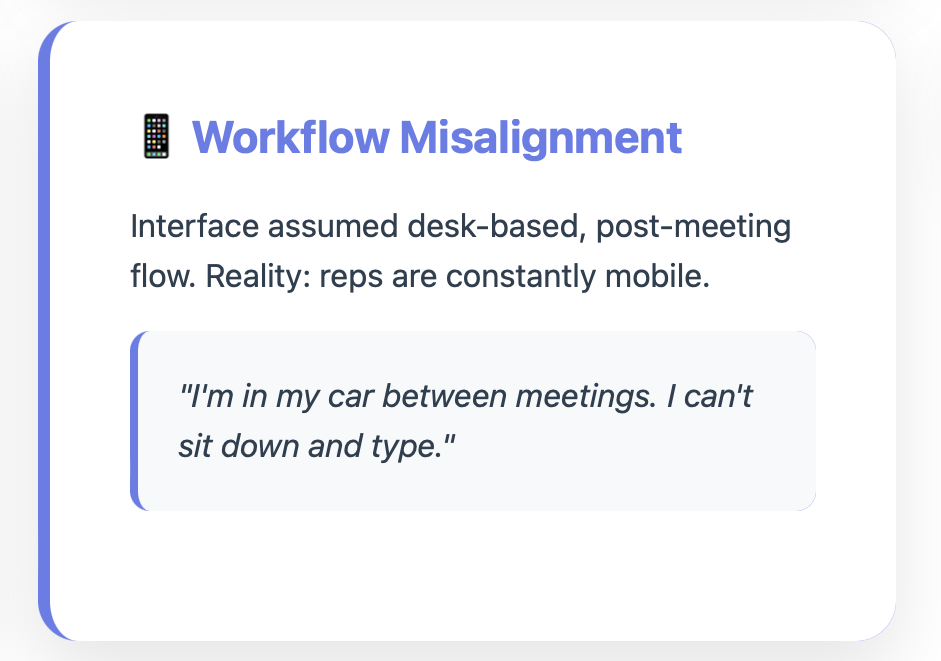
5. Reps live in their cars, not at their desks.
The interface assumed reps had time after meetings to sit down and type. Reality?
"I'm in my car between meetings. I can't sit down and type."
They're answering texts, prepping for the next call, driving to the next appointment. "Later" never comes because there is no later. The system wasn't designed for how they actually worked.
The problem wasn't time management. It was workflow misalignment.
What Was Recommended- Meet Them Where They Are
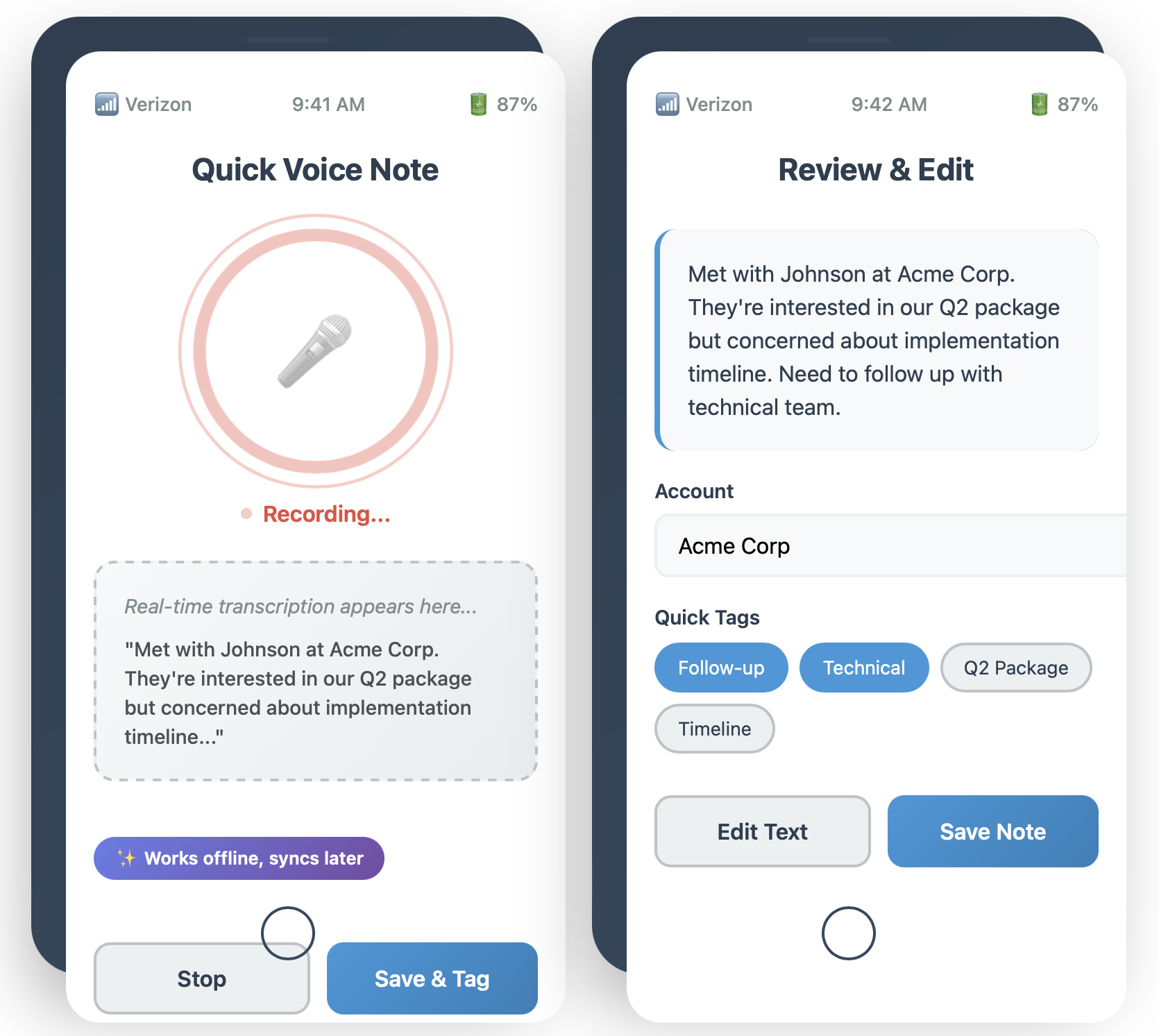
Voice-to-text for in-car capture
Talk into your phone between meetings. Done.
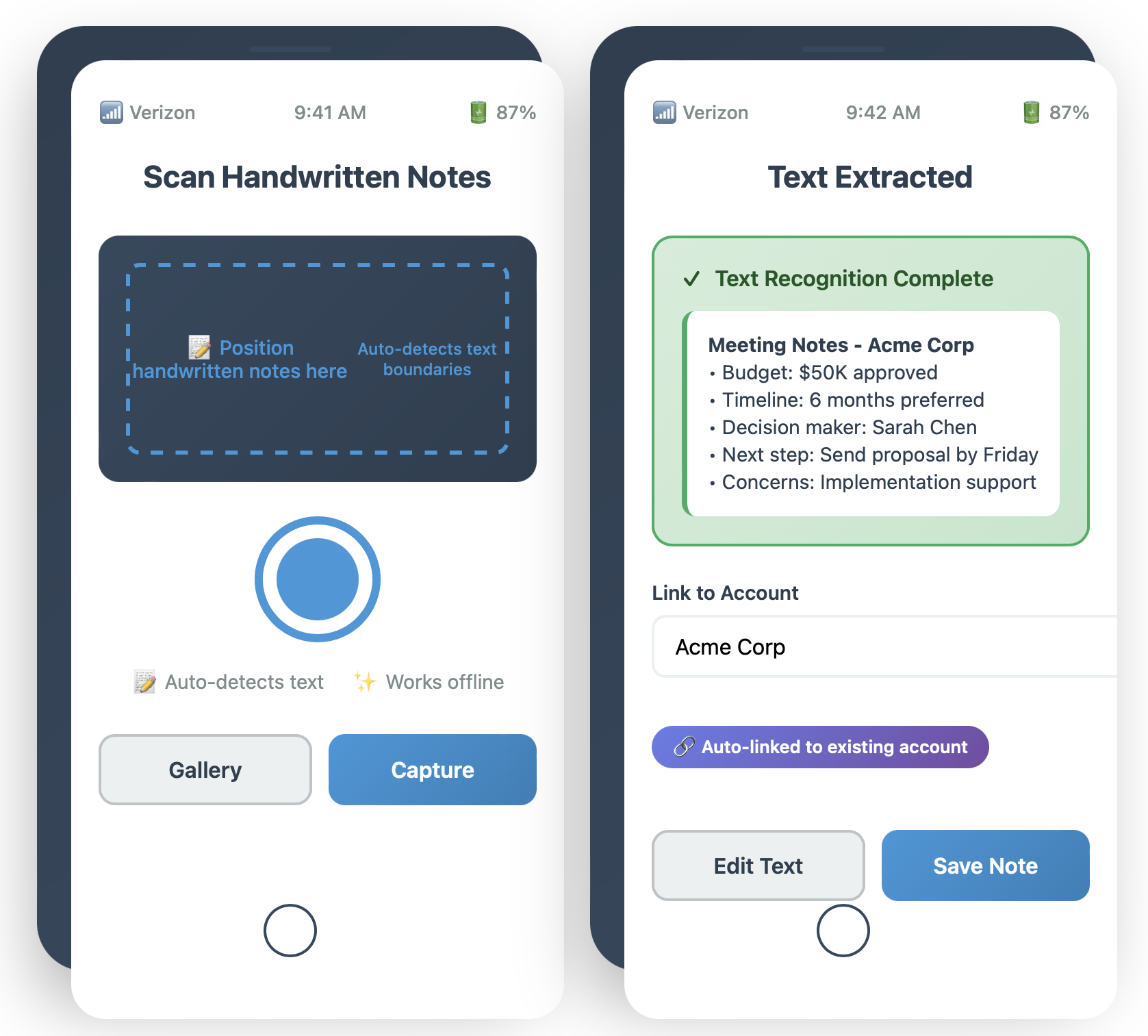
Photo-to-text (AI OCR) for handwritten notes
Snap a picture. System converts it. No retyping.
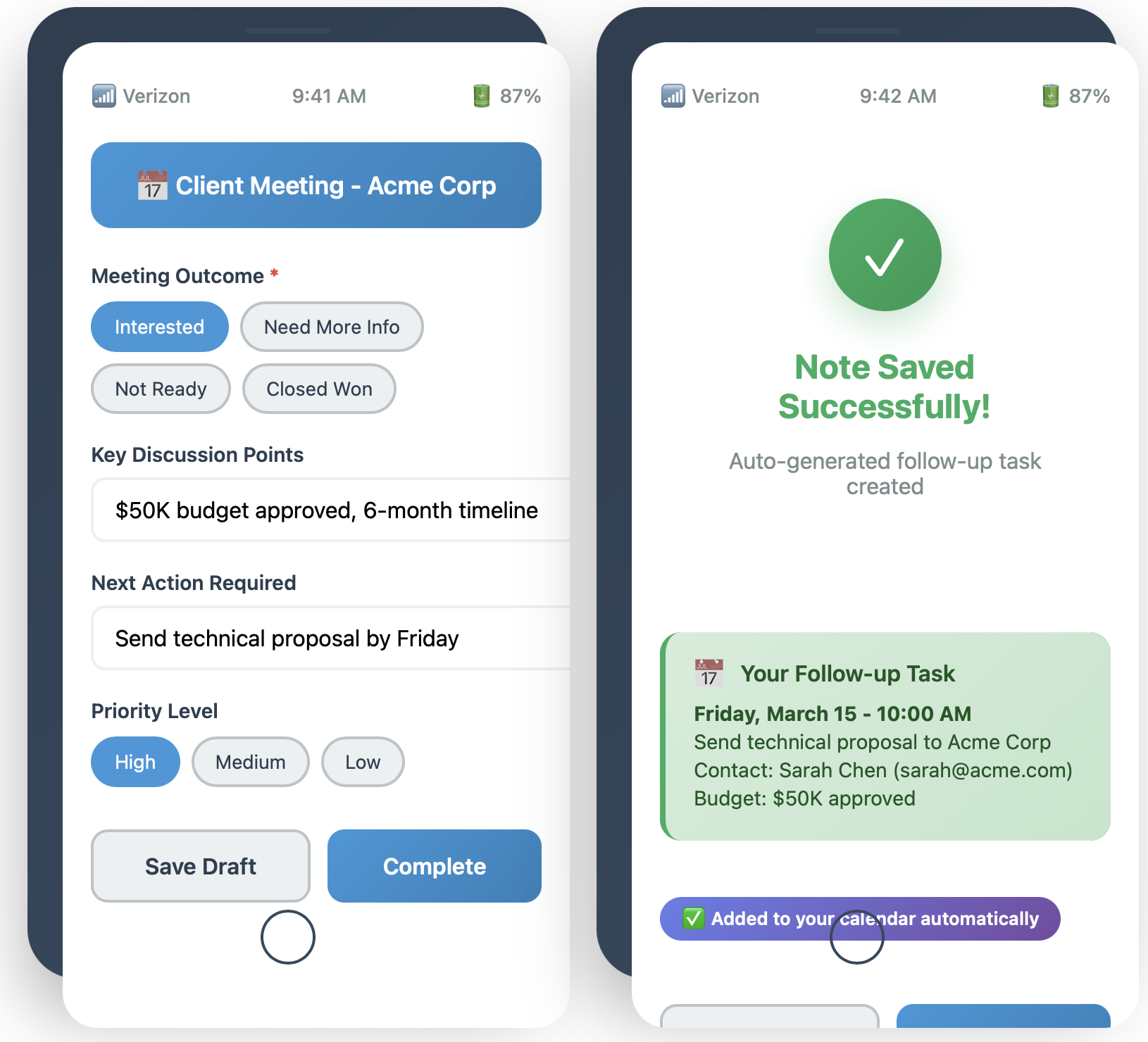
Smart templated cards
Context-aware forms that adapt based on meeting type. Minimal typing, maximum structure.
What I Learned
Assumptions are expensive.
Leadership was smart and well-intentioned. They just hadn't talked to users. One conversation would've saved $350K+.Value drives behavior, not features.
If users don't see personal benefit, they won't use it. Technology doesn't change behavior. Value does.Trust is harder to build than software.
Years of broken promises created skepticism. Trust is earned slowly. It's not a technical problem, it's a human one.Context matters more than consistency.
Regional differences aren't bugs; they're realities to design for. Flexibility isn't a compromise. It's a requirement.
What I'd Do Differently
Talk to reps, not just Directors.
Directors gave me a strategy. I should've observed actual reps in the field. Watching someone work tells you things interviews never will.Prototype faster.
I identified problems, but didn't test concepts during research. Quick prototypes would've validated ideas in real-time.Co-create with users.
Instead of designing and presenting, I could've run workshops where reps helped design the features. Should've invited them in earlier.
What Happened Next
Leadership scrapped the iPad plan. I recommended three phases:
Phase 1: Interview frontline reps to validate findings
Phase 2: Build prototypes for voice-to-text and templated inputs
Phase 3: Design value-return mechanisms that make note-taking worthwhile
The Takeaway
Leadership wanted a device. Users needed motivation.
The ask was hardware. The answer was behavior.
The solution seemed obvious. The problem was invisible.
5 weeks. 11 conversations. $350K+ saved.
Sometimes the most valuable thing you can do is ask: "But why?"

Research Documentation - What I Presented to Leadership
I synthesized 11 hours of interviews into an executive report that made the case for pausing the iPad investment. Here's how I structured the argument:
Executive Summary page showing research question and participant list (This has been removed from this report for privacy reasons)
The core question I posed:
"Is providing sales reps with iPads a viable solution to improve note-taking efficiency?"
The argument that changed minds:
"Handing out iPads can make note entries more convenient, but it only addresses HOW reps enter data, not WHY they aren't motivated to.
The alternatives I recommended, backed by user evidence.
📄 [Download Full Research Report] - See the complete strategic recommendation presented to upper management
This project demonstrates how strategic UX research can prevent costly mistakes and shift product direction through user-centered insights.